
Advantages and Disadvantages of Sandblasted Stone
Sandblasting is a crucial technique in the stone industry, offering both functional and aesthetic advantages. It enhances the visual appeal of natural stones while improving durability, slip resistance, and surface preparation. This process is widely used in architectural and design projects to create customized textures and engraved details.
Benefits of Sandblasting in the Stone Industry
1. Creating Attractive and Diverse Textures
Sandblasting offers the ability to create a variety of stunning and unique textures on the surface of natural stones. This process gives the stone a natural, rugged, or artistic appearance, which can be tailored to suit both modern and traditional architectural designs. The flexibility in creating smooth, coarse, or patterned finishes allows architects and designers to customize the stone’s surface for specific aesthetic goals. For instance, the textures can range from subtle matte finishes for interiors to bold, rough patterns for exterior facades, creating a versatile range of applications.
2. Enhancing Slip Resistance
One of the primary functional benefits of sandblasting is the significant increase in surface friction due to the rough texture it creates. This makes sandblasted stones an excellent choice for areas where safety is a concern, such as staircases, walkways, and wet spaces like pool decks. The enhanced grip provided by the textured surface reduces the risk of slipping, especially in outdoor areas exposed to rain or ice. As a result, sandblasting has become a go-to technique for creating non-slip surfaces in residential, commercial, and public projects.
Read More: Applications of Sandblasting in the Stone Industry
3. Surface Cleaning and Preparation
Sandblasting is a highly effective method for preparing stones for further processing or application. It removes surface impurities, such as dirt, stains, and old coatings, ensuring a clean and smooth base for additional treatments like sealing, painting, or polishing. By stripping away unwanted residues and imperfections, sandblasting rejuvenates the stone’s surface, restoring its natural beauty and making it appear fresh and unblemished. This makes it particularly valuable for restoring older stones in renovation projects or preparing stones for intricate designs.
4. Creating Engraved Designs
One of the most creative uses of sandblasting is the ability to produce detailed and intricate engraved designs on stone surfaces. By precisely controlling the pressure and depth of the abrasive spray, designers can carve custom patterns, logos, or text into the stone. This makes sandblasting an invaluable tool for creating personalized and decorative elements in both interior and exterior applications. For instance, engraved stones can be used in memorials, signage, decorative walls, or even bespoke furniture pieces, adding a layer of uniqueness and artistry to the project.
5. Preserving the Natural Properties of Stone
Unlike some finishing techniques that alter the fundamental characteristics of the stone, sandblasting focuses only on the surface layer. This ensures that the stone retains its natural structure, strength, and other inherent properties. By preserving the stone’s integrity, sandblasting enhances its usability without compromising its original durability or performance. This makes it a preferred choice for projects where maintaining the authenticity of natural stone is essential.
6. Increasing Stone Durability
Sandblasting improves the durability of stones by removing weaker surface layers and exposing the stronger underlying material. This process eliminates surface-level imperfections and impurities that can compromise the stone’s strength over time. As a result, sandblasted stones are more resistant to wear and tear, making them ideal for high-traffic areas and harsh environmental conditions. Whether used in flooring, facades, or outdoor paving, sandblasted stones offer increased longevity and resilience.
7. Compatibility with Various Stone Types
One of the standout features of sandblasting is its versatility across different types of stones, including granite, marble, travertine, and limestone. Each stone responds uniquely to the sandblasting process, resulting in a wide range of finishes that cater to diverse design preferences. For example, sandblasted granite provides a robust and weather-resistant surface suitable for exteriors, while sandblasted marble offers a sophisticated and textured finish perfect for luxury interiors. This adaptability makes sandblasting an excellent choice for projects requiring a variety of stone finishes.
Sandblasting is not just a processing technique; it is a transformative tool that enhances both the functionality and aesthetic appeal of natural stones. By creating unique textures, improving slip resistance, cleaning surfaces, and preserving the stone’s natural properties, sandblasting has become an integral part of modern stone processing. Its ability to increase durability and adapt to various stone types further solidifies its role in architectural and design projects. Whether for safety, style, or longevity, sandblasting offers solutions that meet the demands of contemporary construction and design.
Advantages and Disadvantages of Sandblasted Stone
Advantages
1. Uniform Texture with Consistent Depth
Sandblasting with specialized machines and polishing heads creates evenly distributed pits and grooves on the stone surface. Unlike manual or air-pressure sandblasting, this method preserves the edges of the stone, preventing damage during processing.
2. High Friction and Non-Slip Surface
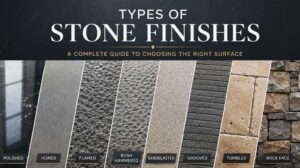
Similar to Bush Hammer processing, sandblasting results in a rough surface with high friction, making it ideal for non-slip applications. The shallower grooves compared to Bush Hammer finishes create a more subtle texture suitable for various uses.
3. Improved Cleaning and Maintenance with Brushed Sandblasting
One drawback of standard sandblasted stone is its susceptibility to dirt accumulation, which can make cleaning difficult. However, brushed sandblasting offers a solution by reducing dirt absorption while retaining the non-slip properties. The brushed finish also makes the surface easier to clean and adds light-reflective qualities, enhancing its aesthetic appeal.
Disadvantages
1. Dirt Accumulation
Standard sandblasted stones are prone to collecting dirt and stains due to their porous surface, requiring frequent maintenance.
2. Surface Wear Over Time
While durable, the textured surface can wear down over time in high-traffic areas, potentially reducing the non-slip properties.
3. Limited Reflectivity
Traditional sandblasting lacks the reflective quality found in brushed sandblasting, which may not suit projects requiring a more polished or luminous look.
Advantages of Brushed Sandblasting
- Elegance with Functionality:
The combination of sandblasting and brushing delivers both aesthetic sophistication and practical benefits. This makes the stone versatile for a wide range of projects, from luxurious interiors to durable outdoor installations.
- Customizable Appearance:
Different brushing techniques and intensities allow for a variety of textures, from subtle to pronounced, enabling designers to tailor the finish to the project’s specific needs.
- Eco-Friendly Processing:
Unlike some other finishes, the brushed sandblasting technique relies on mechanical methods rather than chemical treatments, making them environmentally friendly.
- Low Maintenance:
The reduced porosity of brushed finished stones minimizes dirt absorption, simplifying cleaning and maintenance. This is particularly valuable in high-traffic areas or outdoor spaces where stones are exposed to dust and environmental pollutants.
Conclusion
Sandblasting plays a vital role in maximizing the potential of natural stones by enhancing their texture, safety, and longevity. Its versatility across different stone types makes it a preferred choice for architects and designers. Whether for decorative or practical purposes, sandblasting remains an essential tool in modern stone processing.