
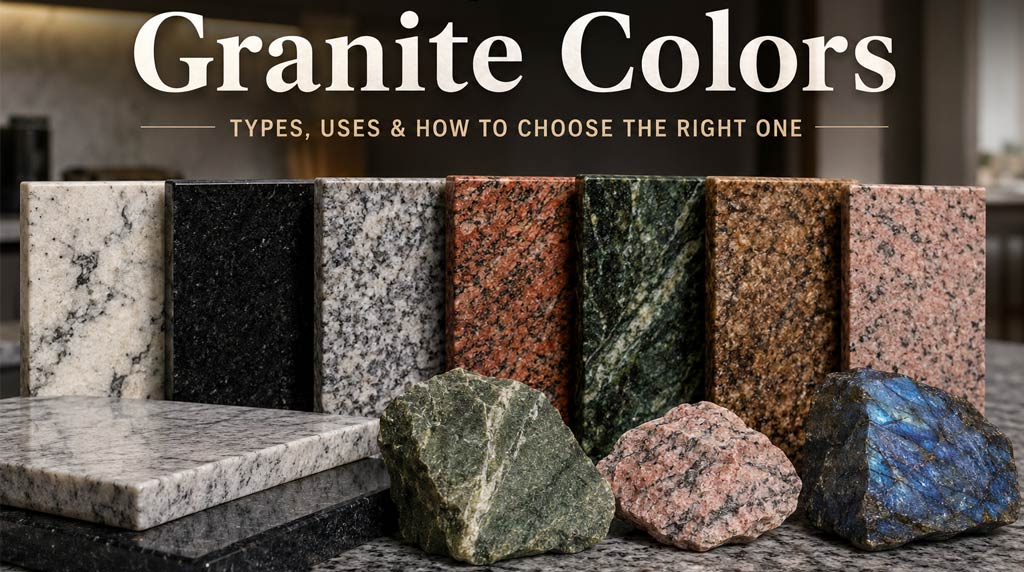
Granite comes in a wide range of colors — white, black, gray, red, green, brown, and rarer shades like pink and blue. Among the different granite colors available, some are far more common than others, and each brings its own character to a space. The right choice depends on your design style, the room’s lighting, how the space is used, and your budget. Below, we break down every major color once — clearly and without repetition — so you can make a confident decision for your project.
What Is Granite?
Granite is a coarse-grained igneous rock formed as magma cools slowly deep underground. Its resistance to heat, pressure, abrasion, and chemicals has made it a go-to material for flooring, facades, kitchens, and bathrooms for centuries. The color and pattern of any given slab come down to its mineral composition — mainly the ratio of quartz, feldspar, and mica — as well as the quarry it was extracted from. That’s why two slabs sold under the same name can still look noticeably different from each other.
Granite Color Guide
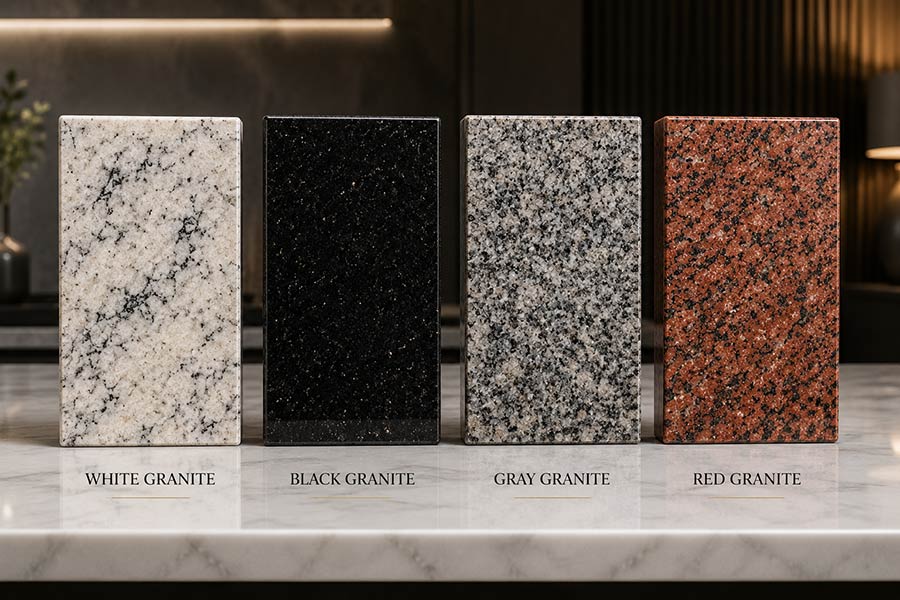
White Granite
Light and neutral, often flecked with gray or black veining, white granite makes a space feel brighter and more open.
- Best for: countertops, backsplashes, hallway and bathroom floors, modern kitchens
- Why choose it: pairs easily with almost any decor, relatively low maintenance, gives rooms a clean, airy feel
Curious how it looks up close? Take a look at the white granite options available at Pars Stone.
Black Granite
With bold, glossy grain, black granite reads as powerful and upscale, and it’s one of the most stain- and scratch-resistant options available.
- Best for: luxury flooring, building facades, fireplaces, dining table surfaces
- Why choose it: stains are far less visible on it, works well in formal or high-traffic spaces
Want to see it in person? Pars Stone carries a wide range of black granite slabs you can browse through.
Gray Granite
A neutral, classic tone that blends with virtually any color palette.
- Best for: staircases, living room floors, wall cladding, countertops
- Why choose it: a “safe” pick when the rest of your decor isn’t finalized yet, versatile across styles
Red Granite
Warm and energetic, often streaked with white or black veining that adds visual depth.
- Note: because it’s bold, it usually works best as a focal point in part of a room rather than covering the entire space
Green Granite
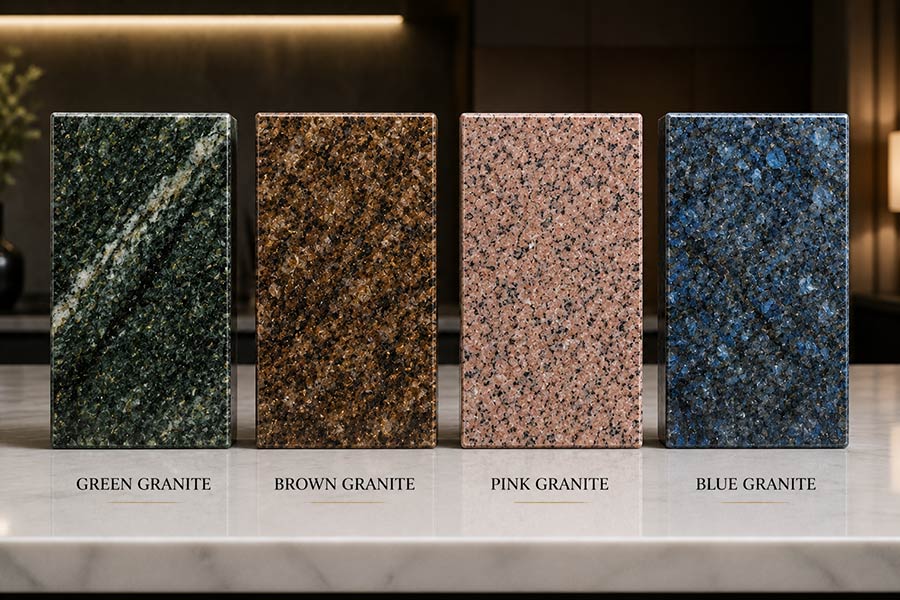
A calming, natural tone with white or gold veining.
- Best for: lobbies, interior feature walls, building facades, organic-style kitchens
- Why choose it: brings a sense of nature indoors and stands out from the more common colors
If you’d like to see real samples, Pars Stone offers a curated selection of green granite slabs worth checking out.
Brown Granite
Warm and earthy, with white or gold veining, well suited to classic and rustic styles.
- Best for: living room floors, wall cladding, traditional or rustic interiors
- Why choose it: adds warmth and coziness, and hides minor stains reasonably well
Pink and Blue Granite
These two are genuinely rare in the building-stone market and tend to show up more in decorative or sculptural work than everyday construction. Before buying, always confirm with the supplier exactly what stone you’re getting — in the trade, “blue granite” is sometimes actually a different rock, such as labradorite, mislabeled for marketing purposes.
What Determines a Granite Slab’s Color and Quality?
Three main factors shape a slab’s final color:
- Mineral content — different minerals produce different colors.
- Purity of the stone — purer granite tends to have more uniform coloring.
- Geological formation conditions — the environment the stone formed in affects its texture and vein pattern.
Overall quality is also influenced by the quarry of origin, porosity (lower porosity generally means better stain resistance), quartz content, and how dense the veining is.
Granite Color Comparison Table
⚠️ This table is a general reference, not a lab-tested standard — actual durability varies by quarry and finishing process, so it’s worth confirming specifics with your supplier before buying.
| Color | Typical Porosity | Stain Resistance | Relative Price Range |
| White | Low | High | Mid-range |
| Black | Low | Very high | High |
| Gray | Medium | Good | Mid-range |
| Red | Medium | Good | Mid to high |
| Green | Medium | Good | Mid-range |
| Brown | Medium | Good | Mid-range |
How to Choose the Right Granite Color for Your Project
By design style
- Modern and minimal → white, light gray
- Classic and upscale → black, dark brown
- Rustic and cozy → light brown, natural red
By room size and lighting
Lighter colors (white, light gray) make small or dimly lit rooms feel more open and bright. Darker colors (black, brown) add depth and visual balance to larger, well-lit spaces.
By function
- Kitchens: white or gray for a clean look
- Bathrooms: gray or beige for a calm, neutral feel
- High-traffic floors and hallways: black or brown, which hide dirt and stains better
A budget note: domestically quarried granite is often significantly cheaper than imported stone without a meaningful drop in quality, making it a smart way to control project costs.
What Affects the Price of Granite?
- Type and quality: rarer colors and patterns typically cost more.
- Slab size and thickness: larger, thicker slabs cost more.
- Finish: polished, leathered, and flamed (bush-hammered) finishes each carry different costs.
- Origin: imported stone is generally pricier than domestic options.
- Project extras: cutting, transport, installation, and mortar/adhesive all add to the total budget.
Final Thoughts
Each granite color has its own personality and best use case: white for brightness and simplicity, black for luxury and durability, gray for effortless coordination, red and green for bold, distinctive spaces, and brown for warmth. The best choice comes down to a mix of personal taste, decor style, how the space will be used, and your budget. For larger projects especially, it’s worth consulting a stone specialist before making a final decision.
FAQ
What is the most popular granite color?
Among the different granite colors on the market, black, white, and gray are consistently the most common granite colors chosen for both residential and commercial projects. Black and white lead the pack for kitchens and countertops thanks to how easily they pair with other finishes, while gray remains a top pick for floors and larger surfaces because of its neutral, versatile tone.
Are darker granite colors really more durable than lighter ones?
Black granite generally shows better stain resistance due to lower porosity, but this isn’t an absolute rule — it depends heavily on the specific quarry and slab quality.
Can you mix different granite colors in the same space?
Yes — pairing, say, gray granite flooring with white granite countertops is a common approach. The key is keeping one color dominant and using the second as an accent.
How does domestic granite compare to imported granite in color and quality?
Domestically sourced granite usually offers good color variety at a more affordable price, while certain rare colors or patterns (like some blue or pink varieties) are more often sourced internationally.
source: +