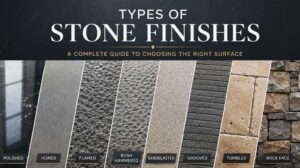
The Grooves Process is a specialized stone finishing technique that enhances both functionality and visual appeal. By incorporating precisely cut grooves, this method improves safety, durability, and aesthetics, making it a preferred choice for various architectural and industrial applications. Whether used for slip resistance in high-traffic areas or as a decorative element in modern designs, the Grooves Process offers remarkable versatility.
Key Characteristics of the Grooves Process
The Grooves Process combines functional improvements with aesthetic appeal, making it one of the most versatile finishing techniques in the stone industry.
Enhanced Slip Resistance: The grooves improve surface traction, making the stone safer for use in wet, icy, or high-traffic areas. This feature is crucial for ramps, staircases, and public pathways.
Customizable Design: The grooves can be tailored to suit specific project needs, whether functional (e.g., slip resistance for outdoor flooring) or decorative (e.g., artistic patterns for feature walls).
Increased Durability: The grooved surface is more resistant to wear, ensuring longevity even in demanding environments like commercial spaces or outdoor installations.
Modern Aesthetic Appeal: The clean, symmetrical grooves lend a contemporary and industrial charm to the stone, complementing minimalist and modern architectural designs.
With its ability to enhance traction, durability, and aesthetic value, the Grooves Process stands out as a practical and stylish finishing technique. Its adaptability to different design needs makes it ideal for both functional and artistic applications. As a result, this innovative method continues to gain popularity in the stone industry, meeting the demands of contemporary architecture and urban planning.