Flooring constitutes the visual foundation of any architectural narrative, establishing the atmospheric tone for residential and commercial spaces alike. While interior design trends oscillate with the seasons, natural stone remains the undisputed monarch of durability, hygiene, and timeless elegance. However, selecting the best stone for interior floors requires a nuanced understanding of geological properties, aesthetic compatibility, and functional resilience, moving far beyond mere surface appeal. As a premier Iran stone company, Pars Stone navigates the intersection of raw nature and refined luxury, guiding you through an extensive curation of materials designed to elevate interiors from simple structures to masterpieces of enduring beauty.
Defining the Criteria: What Makes a Stone “The Best”?
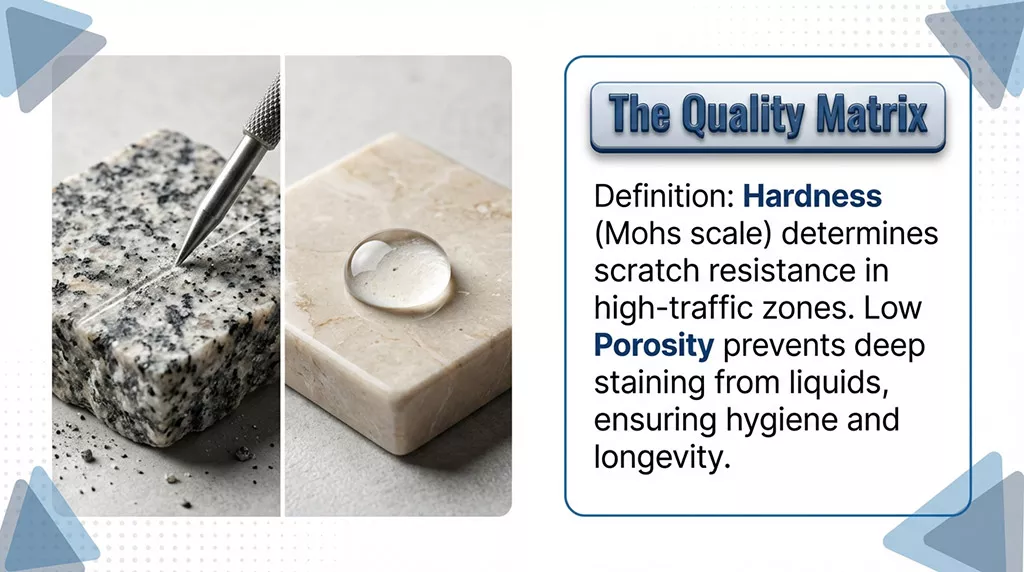
Before delving into specific geological varieties, it is imperative to establish the technical framework that defines the best stone for interior floors. Architects and developers do not choose materials in a vacuum; they evaluate them based on a matrix of hardness, porosity, and aesthetic consistency.
1. Hardness and Abrasion Resistance
The longevity of flooring is directly correlated to its hardness, typically measured on the Mohs scale. For high-traffic areas such as hotel lobbies, commercial corridors, or living rooms in large residences, the stone must resist abrasion. A stone that scratches easily will lose its luster within months. Therefore, the best stone for interior floors in active zones often leans towards granites, crystal marbles, or high-density marbles like Pietra Grey.
2. Porosity and Water Absorption
Porosity dictates how a stone interacts with liquids. In environments prone to moisture—such as kitchens, bathrooms, or entryways—water absorption rates are critical. A stone with high porosity can harbor bacteria or suffer from deep staining if wine or oil is spilled. The most desirable stones for flooring feature a dense molecular structure that repels liquid, or they must be treated with high-grade sealants to ensure longevity.
3. Thermal Conductivity
One of the overlooked benefits of natural stone is its thermal mass. The best stone for interior floors is an excellent conductor of heat, making it the ideal partner for underfloor heating systems. Unlike wood, which acts as an insulator, stone absorbs and radiates heat efficiently, creating a comfortable ambient temperature that enhances the energy efficiency of the building.
The Titans of Flooring: Top Natural Stones for Interiors
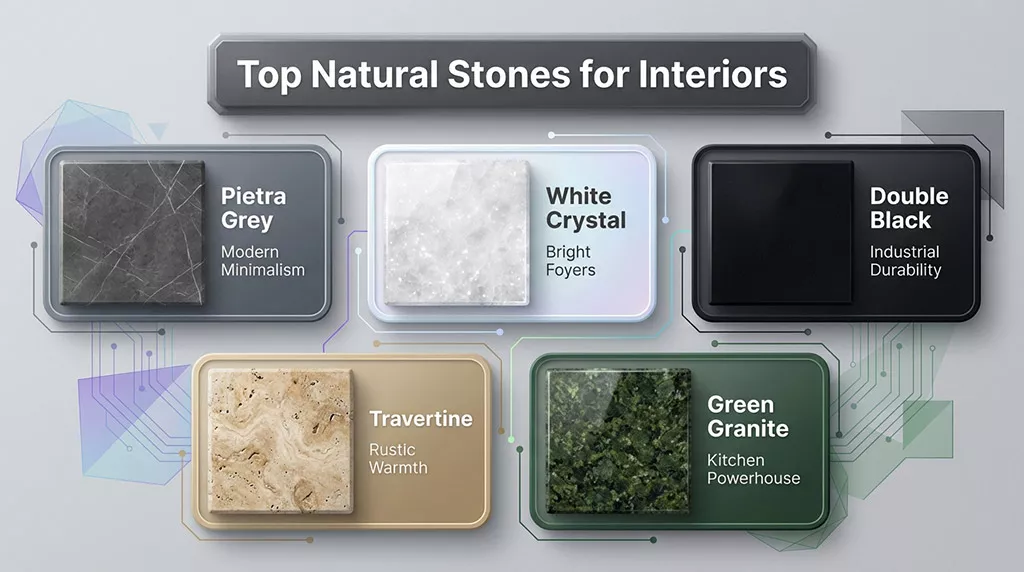
At Pars Stone, we have curated a collection that represents the pinnacle of Iranian geology. Below, we analyze the specific characteristics of the stones that consistently rank as the best stone for interior floors.
Pietra Grey Marble: The Epitome of Modern Minimalism
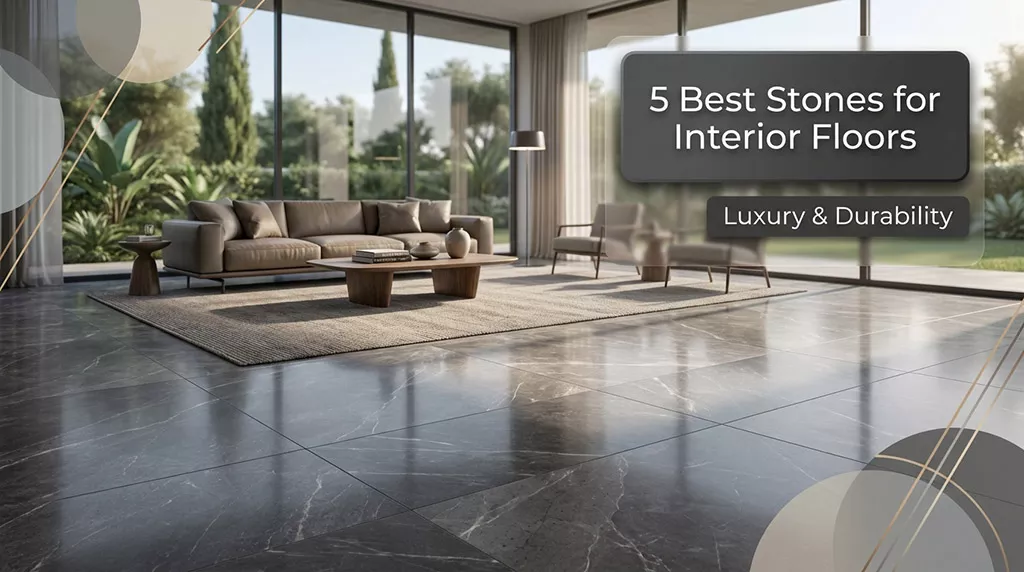
For contemporary designers, few materials rival the sophistication of Pietra Grey Marble. Quarried in Iran, this stone has become a global standard for luxury interiors.
- Aesthetic Profile: Pietra Grey is characterized by its slate-grey to charcoal background, intersected by striking white quartz veins. This stark contrast allows it to serve as a dramatic focal point without overwhelming the space. It pairs exceptionally well with warm timber elements, brass fixtures, and monochromatic furniture.
- Structural Integrity: What makes Pietra Grey the best stone for interior floors in the marble category is its density. It is significantly less porous than Carrara or Calacatta, making it more forgiving in high-traffic zones.
- Application: It is frequently utilized in expansive living rooms and open-plan kitchens where the continuity of the floor creates a sense of boundless space. When finished with a honed (matte) surface, it exudes a velvety, understated luxury that is highly sought after in modern architecture.
Crystal Marble (Neyriz/White Marble): The Luminous Choice
When the objective is to maximize light and create an ethereal, spacious atmosphere, White Crystal Marble (often referred to as Neyriz) stands as a superior contender.
- Aesthetic Profile: This stone features a brilliant white background, often with a “sugary” crystalline texture that sparkles under natural or artificial light. Unlike standard white marbles that may look flat, Crystal Marble has depth. Some variations feature subtle grey or black lines that add movement to the floor.
- Durability Factor: Technically, Crystal Marble is one of the hardest varieties of limestone-based stones, having undergone intense metamorphism. This high degree of crystallization renders it incredibly tough and resistant to water absorption.
- Why it is the Best Stone for Interior Floors: Its ability to reflect light makes rooms appear significantly larger and cleaner. For grand foyers or bathrooms where hygiene and brightness are paramount, Crystal Marble is unrivaled. It offers the classic beauty of white marble with superior physical properties.
Double Black Marble (Semi-Granite): The Industrial Powerhouse
For projects requiring absolute resilience and a bold, masculine aesthetic,Double Black Marble —often commercially classified as Semi-Granite due to its hardness—is the definitive choice.
- Aesthetic Profile: This stone offers a profound, consistent black color. Unlike other black stones that may appear dark grey, Double Black is intense. It provides a grounding effect in interior design, anchoring the room.
- Performance: If your definition of the best stone for interior floors involves invincibility against scratches and wear, this is your answer. Its abrasion resistance is phenomenal, making it suitable even for commercial retail spaces or areas where shoes are worn constantly.
- Design Versatility: While often used in polished forms for a mirror-like finish, a leathered or honed finish on Double Black creates a sophisticated, tactile surface that feels incredible underfoot and mitigates the appearance of dust.
Travertine: The Warmth of Nature
While often associated with facades, specific grades of Travertine (such as Silver, Titanium, or Cream) are exceptionally popular for indoor flooring, particularly in villas and rustic-chic designs.
- Aesthetic Profile: Travertine brings the colors of the earth indoors. With hues ranging from warm beige and walnut to cool silver and titanium greys, it adds instant warmth. The natural porosity is typically “filled” with resin or cement during processing to create a smooth surface for indoor use.
- Texture and Grip: One reason Travertine is considered the best stone for interior floors in family homes is its texture. Even when polished, it retains a certain depth that is less clinical than pure white marble. It is also generally less slippery than granite when wet, provided the finish is selected correctly.
Vein-Cut vs. Cross-Cut: For flooring, cross-cut travertine (fleuri) offers a cloudy, tranquil pattern, whereas vein-cut exposes the linear layers of sediment, creating a directional flow that can elongate a room visually.
The Critical Role of Surface Finishes in Flooring
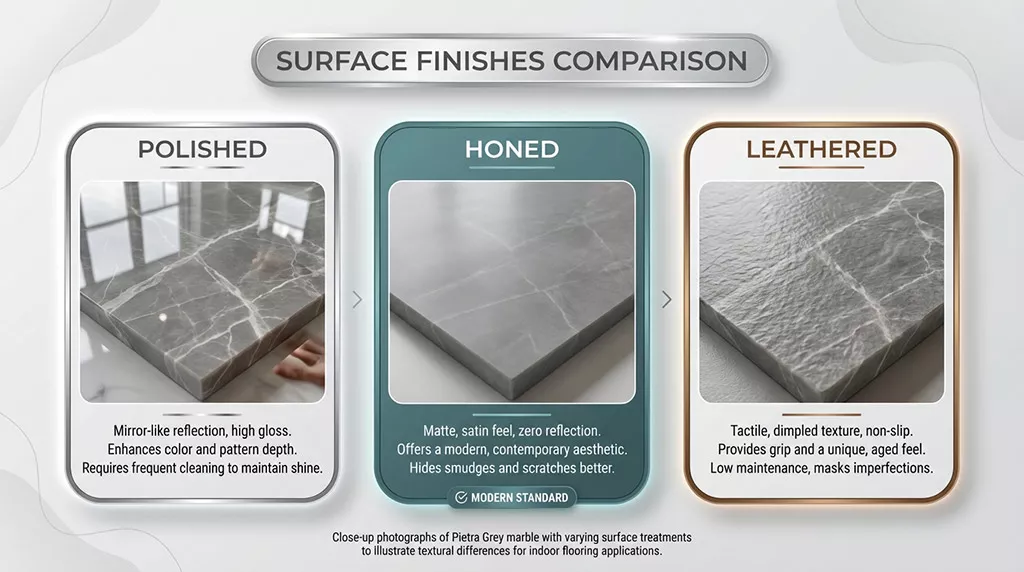
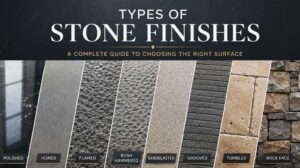
Identifying the best stone for interior floors is only half the equation; the surface finish dictates both the safety and the final look of the project. At Pars Stone, we offer a spectrum of processing techniques to tailor the stone to your specific needs.
1. Polished Finish
This is the classic choice. Grinding the stone with progressively finer abrasives achieves a mirror-like gloss.
- Pros: It highlights the full color and depth of the veins. It is easy to clean.
- Cons: It can be slippery when wet. Scratches are more visible on high-gloss surfaces.
- Best For: Low-traffic living rooms, borders, and wall cladding, or specifically hard stones like Crystal Marble.
2. Honed (Matte) Finish
Currently the most popular finish for contemporary European and North American designs. The stone is ground flat but not buffed to a shine.
- Pros: It provides a satin feel. It conceals scratches and footmarks much better than polished surfaces. It offers better slip resistance.
- Cons: Because the pores are slightly more open, proper sealing is essential.
- Best For: Kitchens, bathrooms, and high-traffic corridors. For Pietra Grey, a honed finish is arguably the standard for modern luxury.
3. Brushed and Leathered Finishes
These finishes add texture. Diamond brushes are used to gently wear away the softer parts of the stone, leaving the harder veins slightly raised.
- Pros: Incredible non-slip properties. Hides dust and fingerprints almost entirely. Adds a sensory, tactile dimension to the floor.
- Cons: Can be slightly harder to mop due to the texture.
- Best For: Double Black marble, rustic Travertine floors, and wet areas.
Technical Superiority: Why Iranian Stone?
When sourcing the best stone for interior floors, the geological origin plays a pivotal role. Iran is widely recognized as a “Stone Paradise,” ranking among the top five stone-producing nations globally. The diversity of the Zagros mountain range allows for the extraction of unique stones that are unavailable elsewhere.
Buying from a direct supplier like Pars Stone ensures that you are not receiving third-party, re-labeled material. You are accessing the source.
- Variety: From the deepest blacks to the purest crystals.
- Processing Quality: Modern Iranian factories utilize Italian machinery (Breton, Pedrini) to ensure precise cutting, calibrating, and epoxy resin treatments.
- Cost-Efficiency: Sourcing directly eliminates middlemen, providing premium luxury at a competitive rate.
If you are a developer or importer looking to buy stone from Iran, understanding these geological advantages is crucial for your procurement strategy.
Installation and Maintenance: Preserving Your Investment

Even the best stone for interior floors requires proper installation and care to maintain its grandeur for decades.
Subfloor Preparation
Natural stone is rigid. If the subfloor (the layer beneath the stone) is uneven or flexible, the stone tiles will eventually crack. A perfectly leveled concrete screed is mandatory. Furthermore, the use of decoupling membranes can prevent cracks in the substrate from transferring to the stone.
The Art of Sealing
While stones like Double Black or Crystal Marble are naturally dense, we recommend sealing all natural stone floors upon installation. Penetrating sealers soak into the micropores of the stone, creating an invisible barrier against oils, wine, and water. This does not alter the appearance of the stone but guarantees that your floor remains the best stone for interior floors in terms of hygiene and stain resistance.
Routine Cleaning
Avoid acidic cleaners (vinegar, lemon, or harsh bleach) at all costs, especially on calcareous stones like Pietra Grey and Travertine. Acid etches the surface, leaving dull spots. The ideal maintenance involves dust mopping and the use of pH-neutral stone soaps.
Comparative Analysis: Stone vs. Synthetic Alternatives
In the current market, buyers are often bombarded with options like porcelain tile or LVT (Luxury Vinyl Tile) that mimic the look of stone. Why, then, should one invest in natural material?
- Uniqueness: Every tile of natural stone is a unique fingerprint of nature. Synthetic tiles have a “repeat pattern” that becomes obvious in large areas.
- Value Addition: Real stone adds quantifiable value to a property. Real estate appraisals consistently value natural stone flooring higher than ceramic or vinyl.
- Aging: Synthetic materials tend to look “worn out” as they age. Natural stone, conversely, acquires a patina. A 100-year-old stone floor often looks more beautiful than a new one.
Therefore, when seeking the best stone for interior floors, one is not just buying a building material; one is investing in a legacy asset.
Choosing the Right Stone for Specific Rooms
To truly determine the best stone for interior floors for your project, consider the specific function of the room:
The Living Room
This is the showcase area. Here, aesthetics reign supreme. Pietra Grey or Vein-Cut Travertine create a sophisticated backdrop for furniture. The priority is visual impact and comfort.
The Kitchen
The kitchen is a high-risk zone for stains (acids, oils) and impact (dropped pots). Granite or Double Black Marble are excellent choices here due to their hardness. If you choose a lighter marble, ensure it is honed and well-sealed to mitigate etching from acidic foods.
The Bathroom
Slip resistance and water tolerance are key. Honed Crystal Marble or Tumbled Travertine are ideal. They resist water well and the textured finish prevents slipping. Small mosaic formats are also popular here as the grout lines add extra grip.
Conclusion
Selecting the best stone for interior floors is a journey that balances artistic vision with engineering realities. Whether you are captivated by the dramatic lightning-bolt veins of Pietra Grey, the pristine luminosity of Crystal Marble, or the industrial fortitude of Double Black, the choice defines the character of your space. Natural stone is not merely a floor covering; it is a permanent installation of earth’s history in your home.
At Pars Stone, we are committed to providing not just raw materials, but comprehensive stone solutions. We invite you to explore our diverse inventory, where quality meets geological rarity. If you are ready to elevate your next project with materials that stand the test of time, we invite you to buy stone for indoor flooring from our curated collections, ensuring your interiors resonate with luxury and permanence.